

!Wait, don’t go just yet! 👋
You’ve got your eye on some of our products! 😍 Make the most of the 10% DISCOUNT on your first order!
Hurry up! It’s valid for the next 24 hours! 🛍️✨
9,95€ (including VAT)
Don't forget to buy the ink cartridge for your stamp.
In stock
| Quantity | Discount | Discounted price |
| 2 - 5 | 10% | 8,96€ |
| 6 - 10 | 15% | 8,46€ |
| 11 - 15 | 25% | 7,46€ |
| 16 - 25 | 30% | 6,96€ |
| 26 + | 40% | 5,97€ |
Manual rubber stamps are versatile tools used to print images, texts, or patterns onto various materials. Their use dates back to ancient times, when civilizations used stamps to mark products, validate documents, or even personalize objects. Over time, these stamps have evolved in design and applicability, becoming popular elements in crafts and contemporary art.
There are different types of manual rubber stamps, which are classified based on their shape, size, and the type of ink they use. Classic stamps, made with a rubber base, are very common, but polymer and silicone bonding stamps have also emerged. Each type offers unique features that adapt to the needs of users, whether they are looking to print on paper, fabric, or even tougher surfaces. This diversity allows the stamps to have a variety of applications, from decoration in DIY projects to use in stationery.
One of the areas where the popularity of handmade rubber stamps is evident is scrapbooking, a creative technique that allows one to document memories in an artistic way. Fans of this practice use the stamps to customize albums and cards, giving them a unique and personal touch. Moreover, these stamps are ideal for decorating invitations, labels, and other decorative elements, making them a favorite choice for those who enjoy creativity and design.
In short, manual rubber stamps have not only proven to be useful tools in various fields, but have also maintained their relevance over time, adapting to new artistic trends and customization needs.
The choice and use of manual rubber stamps are crucial aspects for obtaining high-quality prints. When selecting a stamp, it is important to consider several criteria such as the size, design, and material of the handle. The size of the stamp should be adjusted to the surface to be printed on, ensuring that the message or image is reproduced properly. Similarly, the design of the stamp is fundamental; it should be clear and legible, avoiding too fine details that might be lost in the printing process.
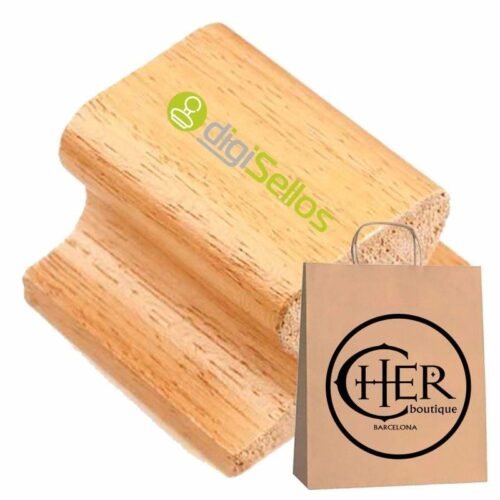
The material of the handle also affects ease of use. Wood handles, for example, offer a classic aesthetic, while plastic handles can be lighter and more ergonomic. When choosing a seal, it is recommended that the handle provide a good grip, which contributes to uniform pressure application when stamping.
Once the appropriate seal has been selected, the next step is to ensure the correct ink is used. When choosing the ink, consider the type of paper and the finish that will be used. Some inks are specifically designed for certain materials, and choosing the appropriate one will ensure lasting prints. It is also important to apply the ink evenly onto the seal using pads or ink rollers, ensuring that each print is clear.
To achieve the best results, it is helpful to follow some techniques when stamping. Make sure to press the seal consistently and use a hard surface to ensure that the seal makes a complete contact with the paper. Finally, taking care of manual rubber stamps is essential to prolong their lifespan. After each use, clean them with water and mild soap to prevent ink buildup and store them in a ventilated place to prevent deformation.
| Weight | 0,095 kg |
|---|---|
| Dimensions | 10 × 15 × 5 cm |
| Form | Rectangular, Square, Round, Oval |
| Width | 5-10 mm, 10-20 mm, 20-30 mm, 30-40 mm, 40-50 mm, 50-60 mm, 60-70 mm, 70-80 mm, 80-90 mm, 90-100 mm, 100-110 mm |
| High | 5-10 mm, 10-20 mm, 20-30 mm, 30-40 mm, 40-50 mm |
| Wood colour | Varnished wood |
| Size | Small, Standard, Large, Extra Large |





Reviews
There are no reviews yet